Know what your rig carries.
Share it with the people you travel with. Find help when something breaks.
The app is in private beta. The list below opens the door to it, and the status section says exactly which parts testers have today.
Take a look
Scroll through it.
The screens below are the approved design the app is built from. Swipe, scroll, or use the arrows.
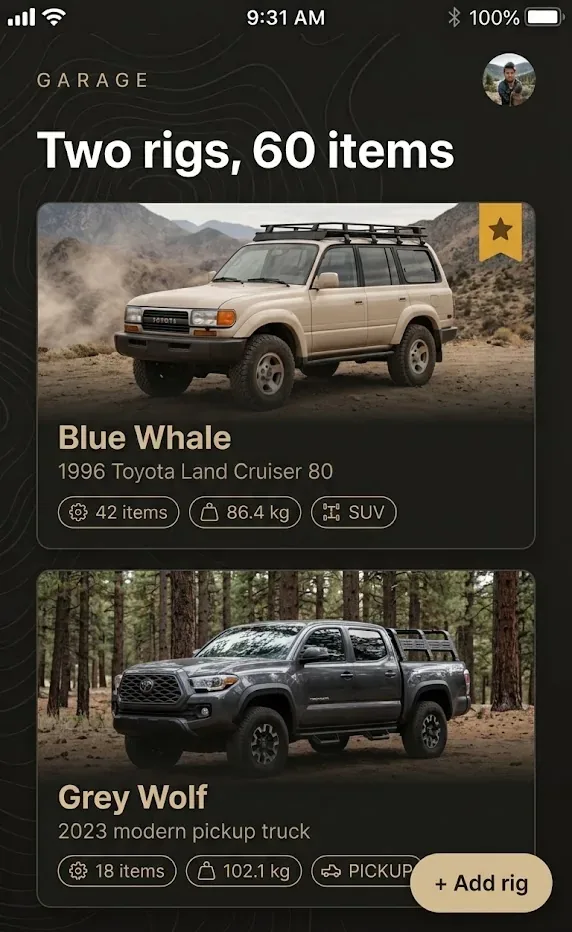
Garage — Every rig you own, with its item count, total weight and vehicle type.
01 — The problem
Groups that travel together carry the wrong load.
“Who brought the medical kit?”
Three people bring an impact driver. Nobody brings a medical kit. The load is heavier than it needs to be and still missing the thing that matters.
“Does anyone have a 265/75 spare?”
Nobody can answer that without a chain of phone calls, and by the time the answer comes back the group has already left.
“Who nearby has the part?”
When something breaks somewhere with no service, that is the useful question — and there is nowhere to ask it.
02 — Your gear
Every rig, and everything in it.
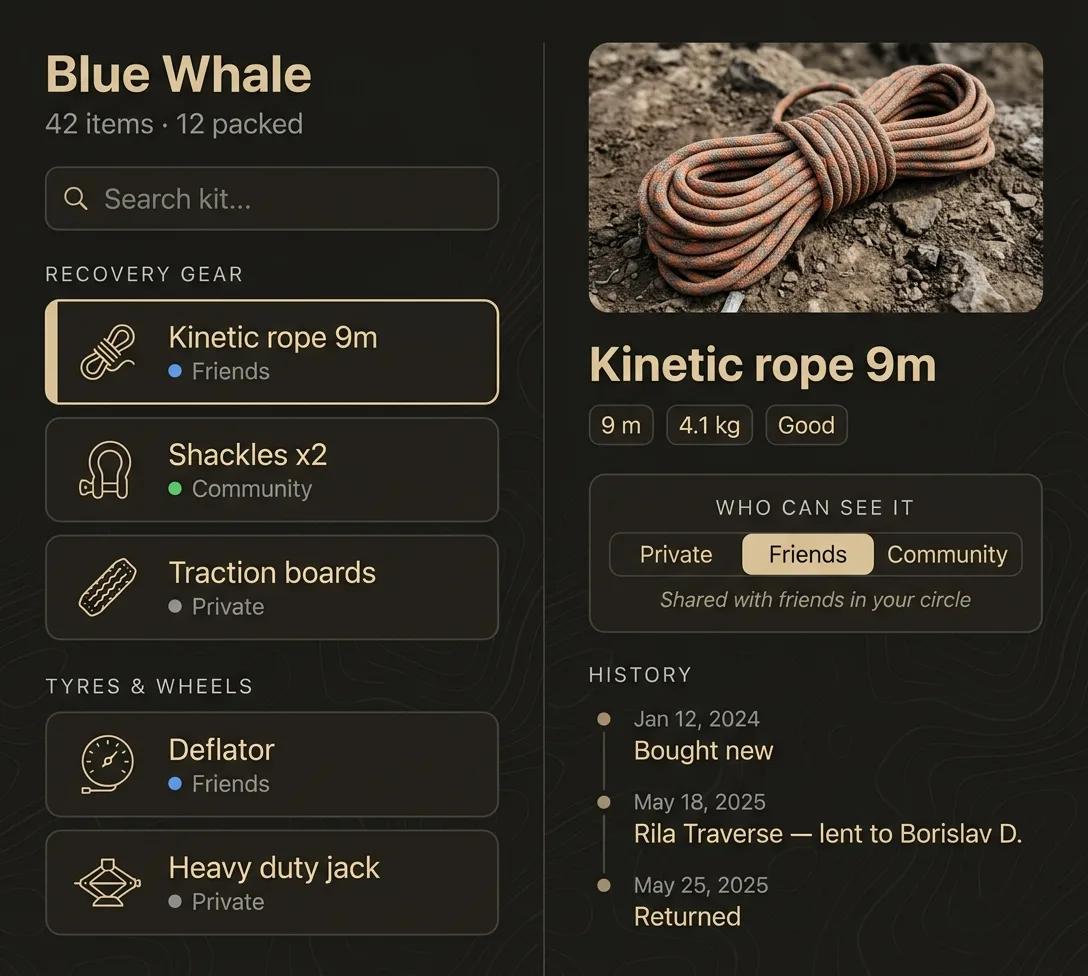
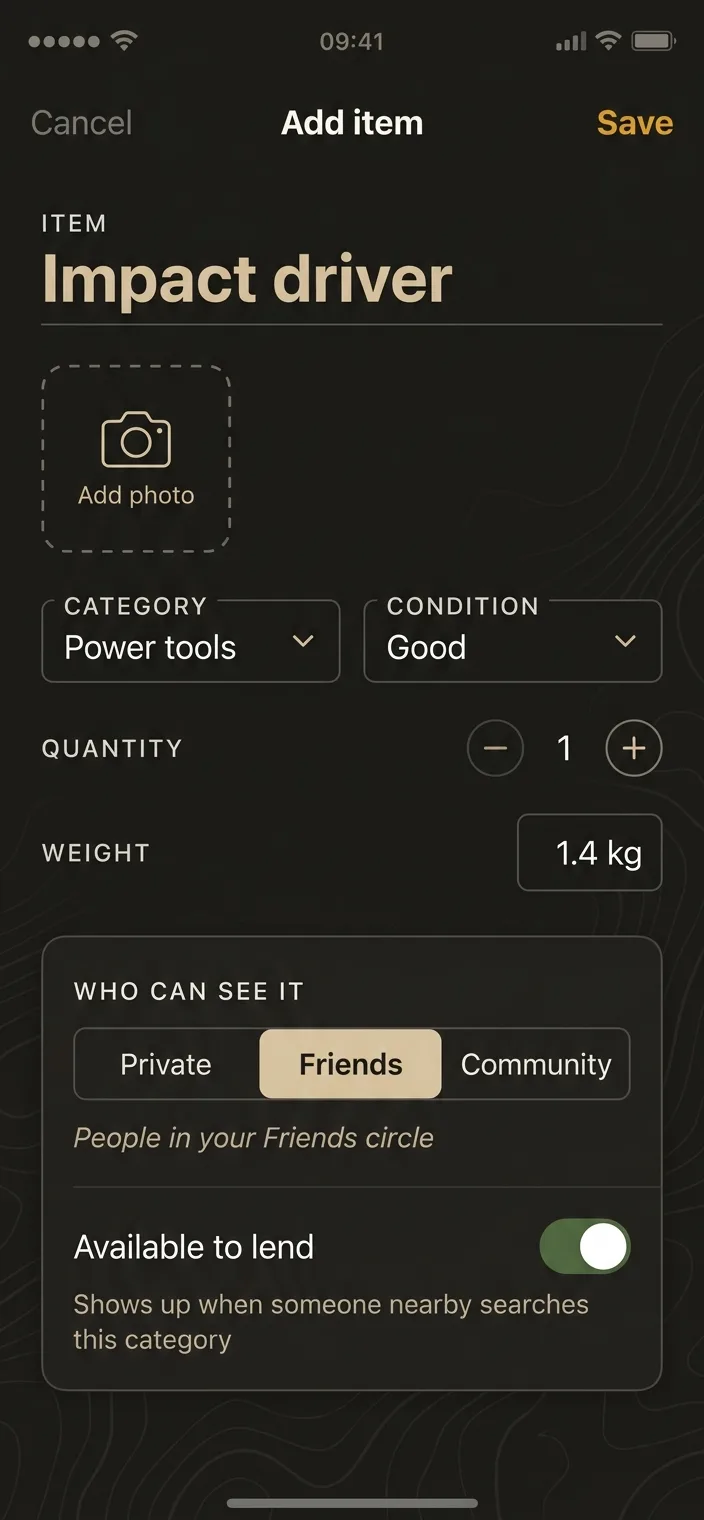
One entry per piece of kit, filed under a category that is deliberately coarse — “Power tools”, not “18V brushless impact driver”. Coarse categories are what let two people's gear land in the same bucket, which is the whole basis of the group checks further down this page.
- Category, quantity, condition, weight and photos — across 19 categories.
- Each item keeps its own timeline: when you got it, every trip it went on, everyone who borrowed it.
- Retire something with a reason and its history stays. Deleting is a separate, confirmed action.
- Works with no signal and no account. The app reads its own database first and syncs when it can.
03 — The load check
Four grills and no trauma kit.
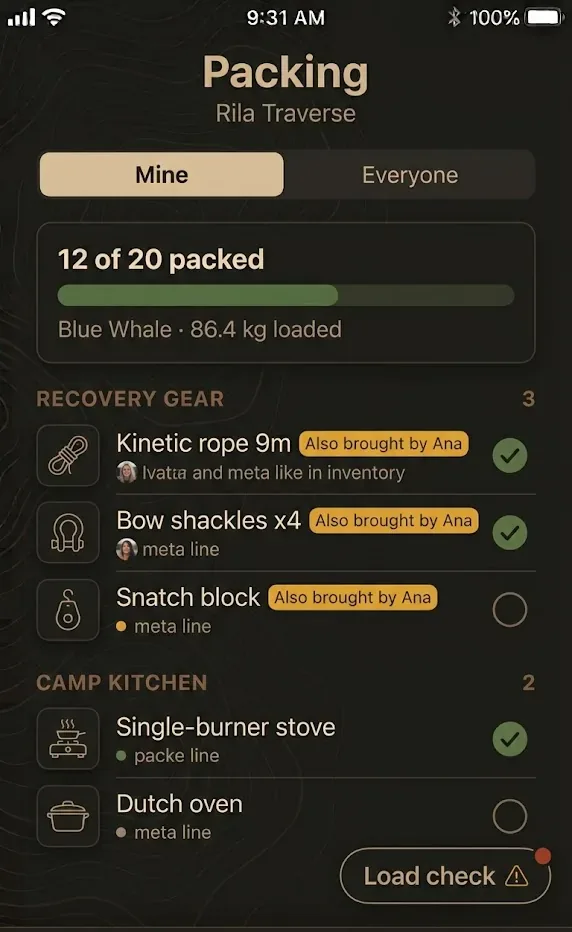
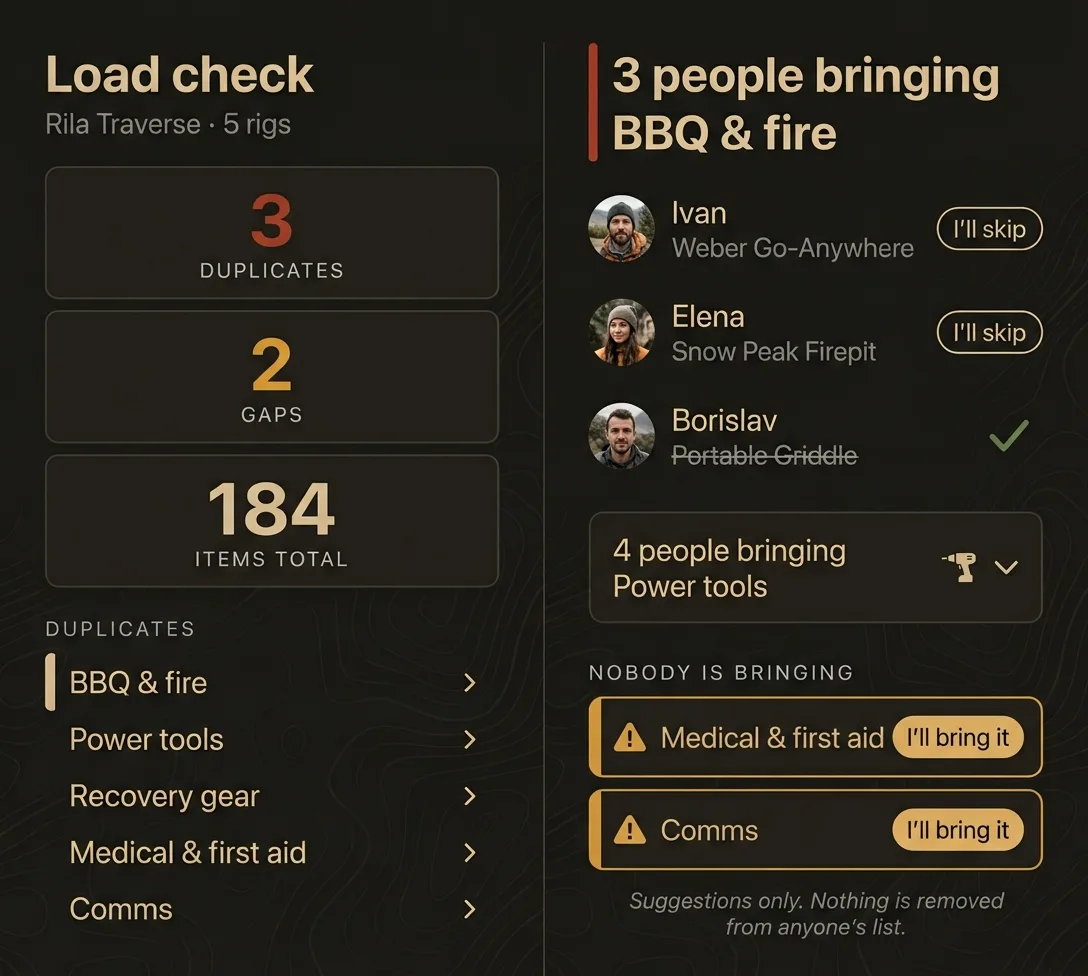
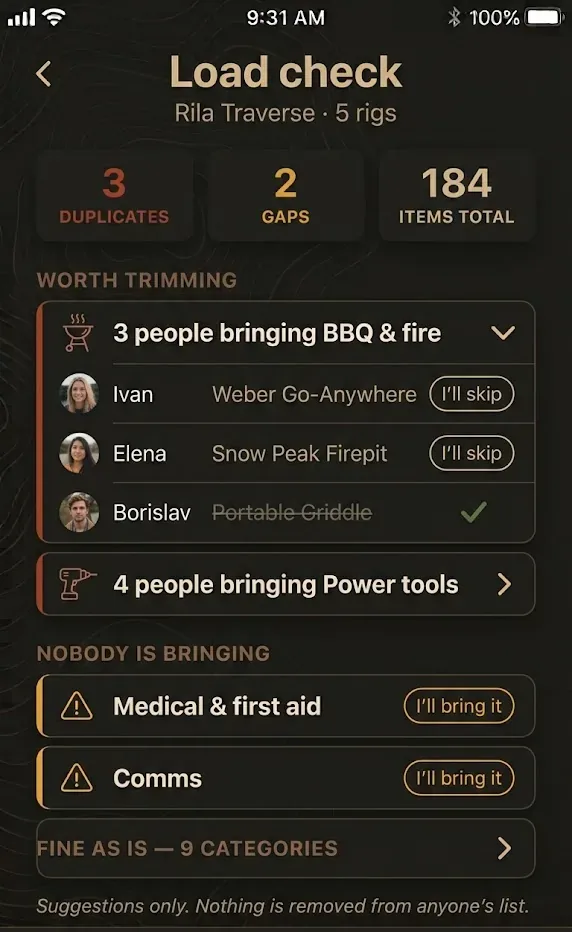
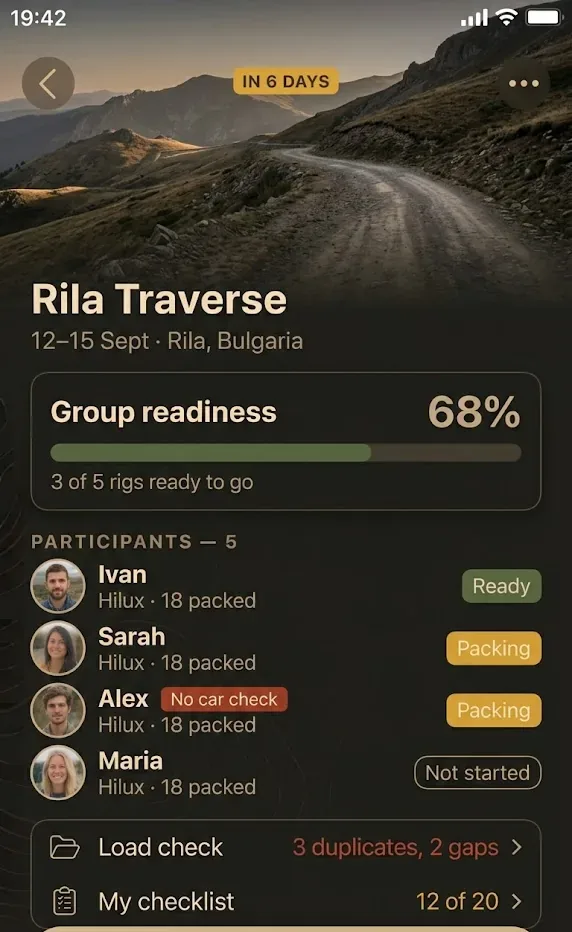
Before a trip leaves, the group's packed lists are compared. Two answers come back: what more than one person is carrying, and what nobody is carrying at all. A planner that only warned about duplicates would happily let a group leave with four grills and no medical kit.
- An overlap counts carriers, not items. One person with three spanner sets is not an overlap; three people each with one is.
- Six categories raise a duplicate. Everything else is filed as “FYI”, because nobody needs telling that two people packed their own sleeping bags.
- Advisory, always. It never un-packs anyone's item — two chainsaws is sometimes the right call, and every finding can be dismissed by the group.
Duplicates are flagged in
Flagged when nobody has one
04 — Trips
Planned, packed, and written down afterwards.
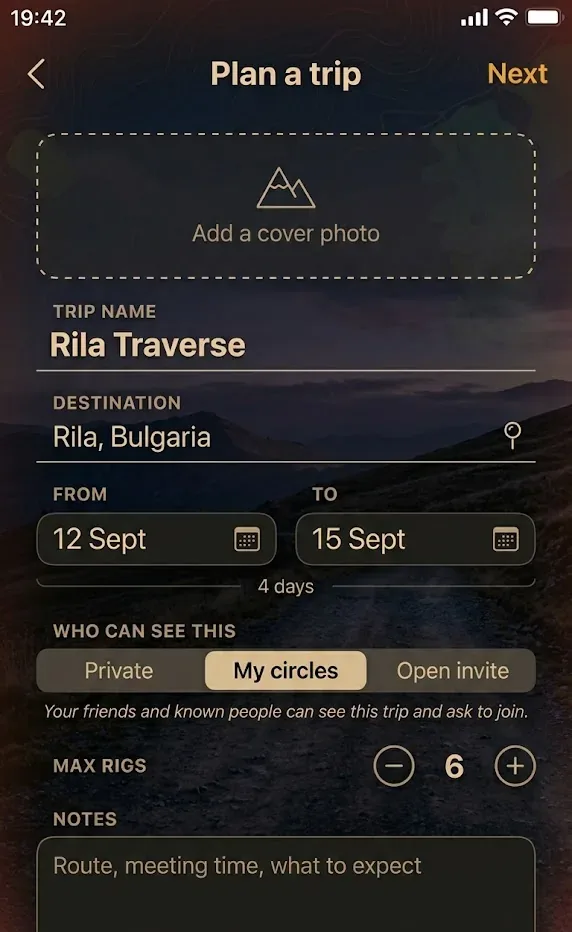
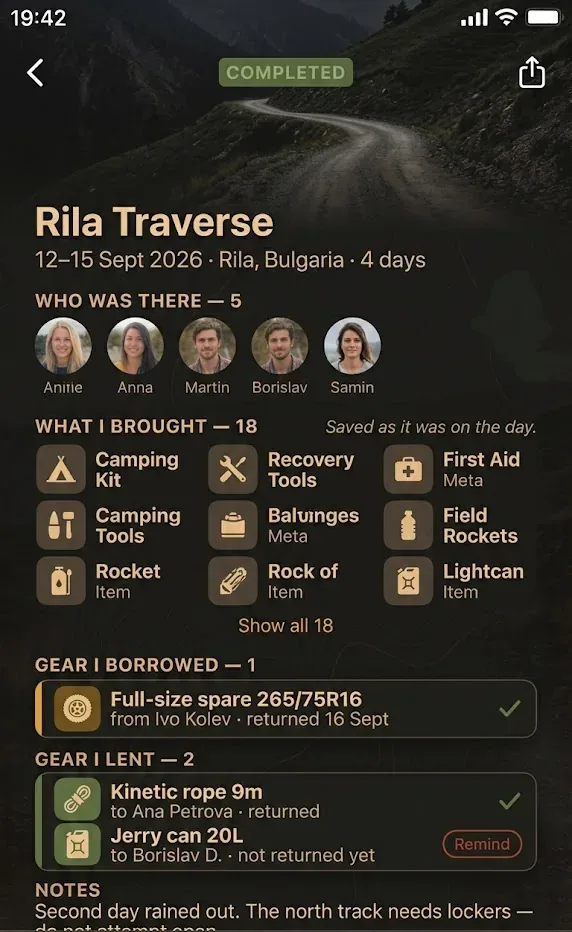
A trip holds the dates, the destination, who is coming and what each of them is bringing. Before departure there is a checklist; afterwards the whole thing is frozen into a log you cannot edit later, because a record you can rewrite is not a record.
- Invite people from your circles, or post the trip openly and take requests.
- Pre-departure checklist covering gear, the vehicle and the admin.
- A wrap-up that closes open loans, saves the loadout and keeps the notes with the trip.
- Spare seat on board? Offer it, or find one going your way.
05 — The rig itself
The check you meant to do before leaving.
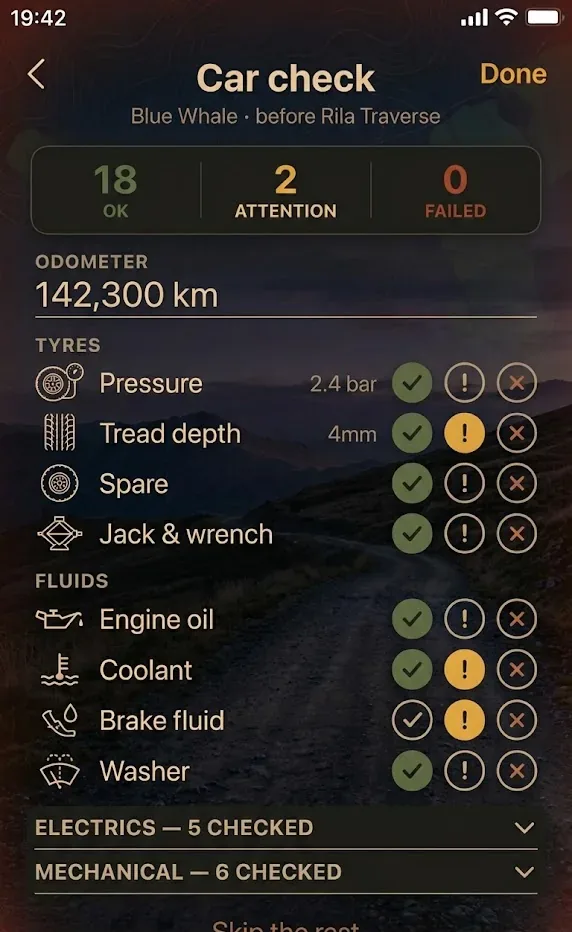
Tyres, fluids, electrics, mechanical — worked through as a list with a pass, a warning or a fail against each line, and room for the measured value where a number is what matters. What you find becomes part of the vehicle's history, not a note you lose.
- Default inspection covering the whole vehicle, in four groups.
- Service log with the odometer reading, date, cost and work done — plus what is due next.
- History is insert-only. Past checks are not editable after the fact.
06 — Circles and lending
Sharing that is not all-or-nothing.
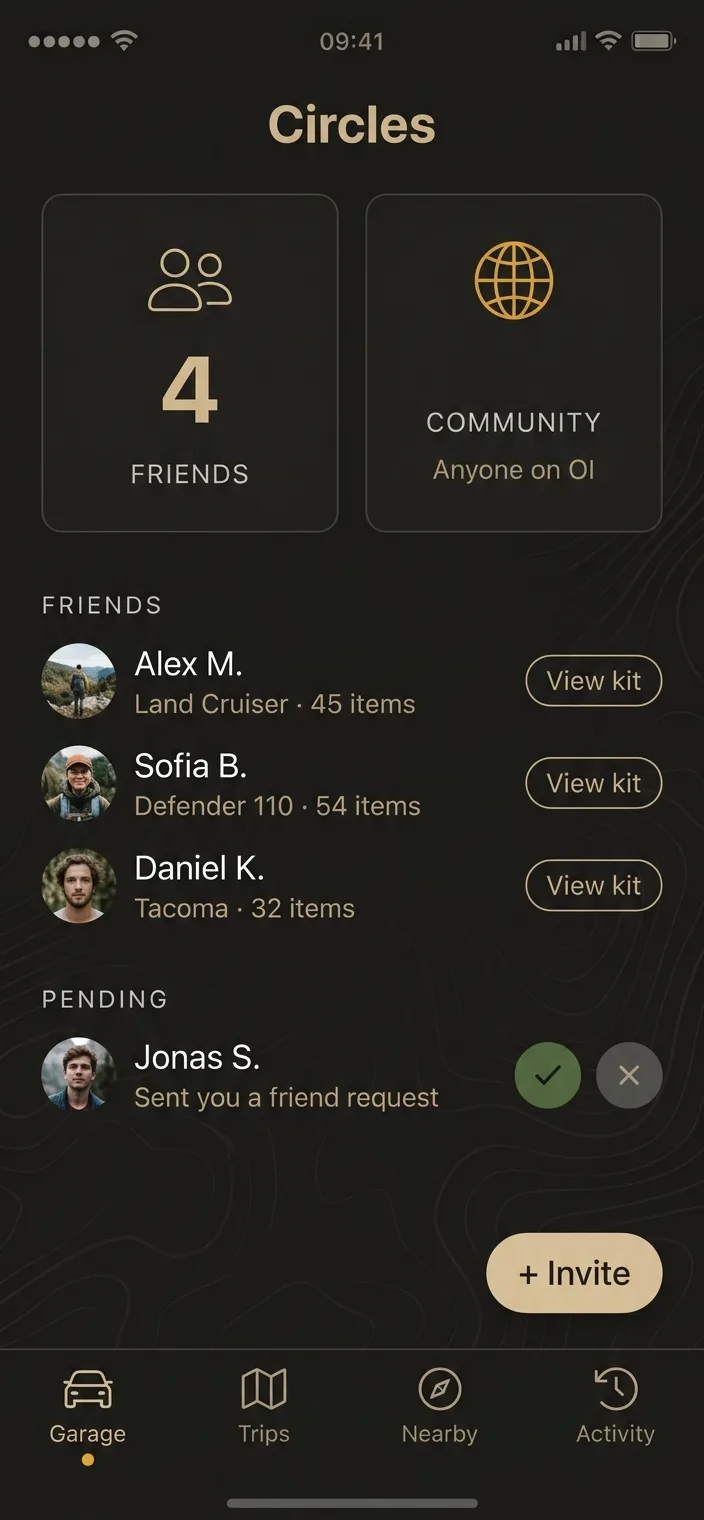
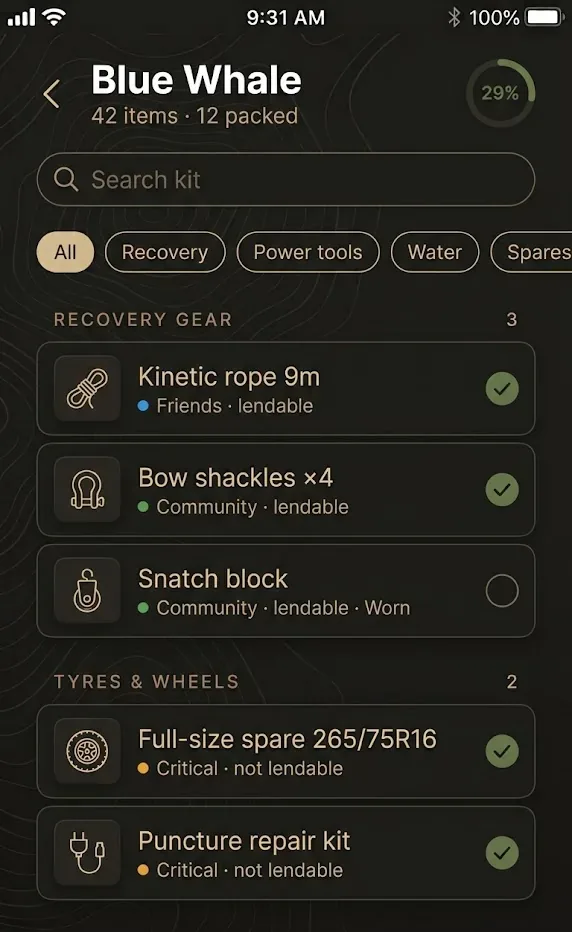
Every item carries one of three audiences — Private (only you), Friends, or Community (anyone using OI). So a winch can be visible to friends, a first aid kit to everyone, and a safe to nobody, from the same list and without a second account.
- Add people by invite link, by their exact username, or by scanning their code. There is no name search — a directory of everyone's kit is not something to build by accident.
- Being visible is not the same as being on offer. Whether an item can be borrowed is a separate switch from who can see it.
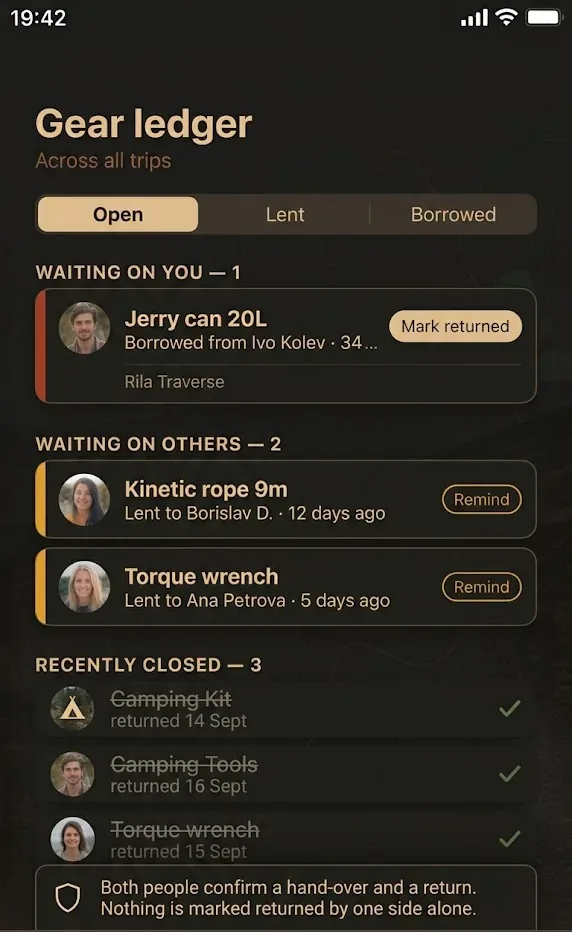
- A loan closes only when both sides confirm it. Nobody can decide on their own that something came back.
- One ledger shows everything out on loan across every trip, in both directions.
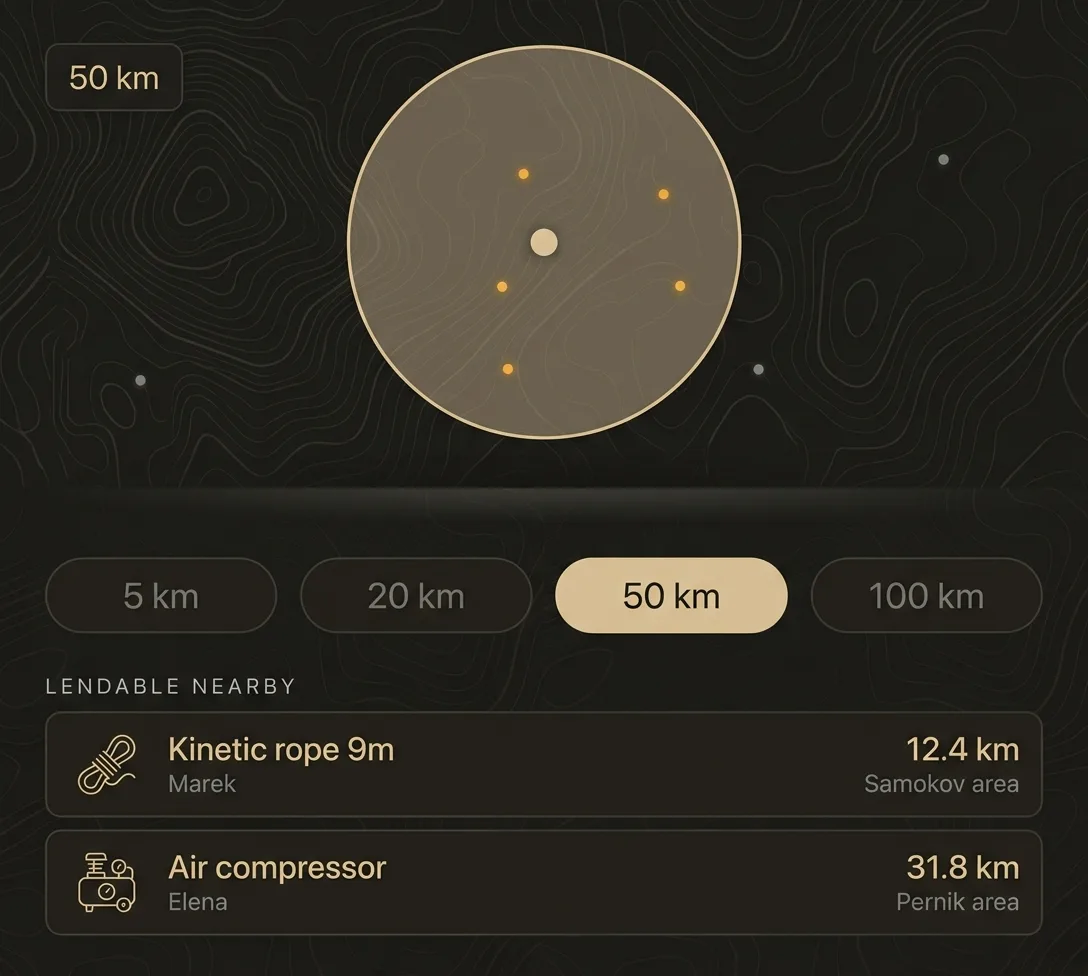
- Nearby is a map, not a list of addresses. It centres on you, draws the ring you picked — 5, 20, 50 or 100 km — and shows what is lendable inside it as a distance and a town-level area. Coordinates are never sent to the app: the database ranks by a distance it does not hand over.
07 — When something breaks
Asking the people around you.
Upcoming
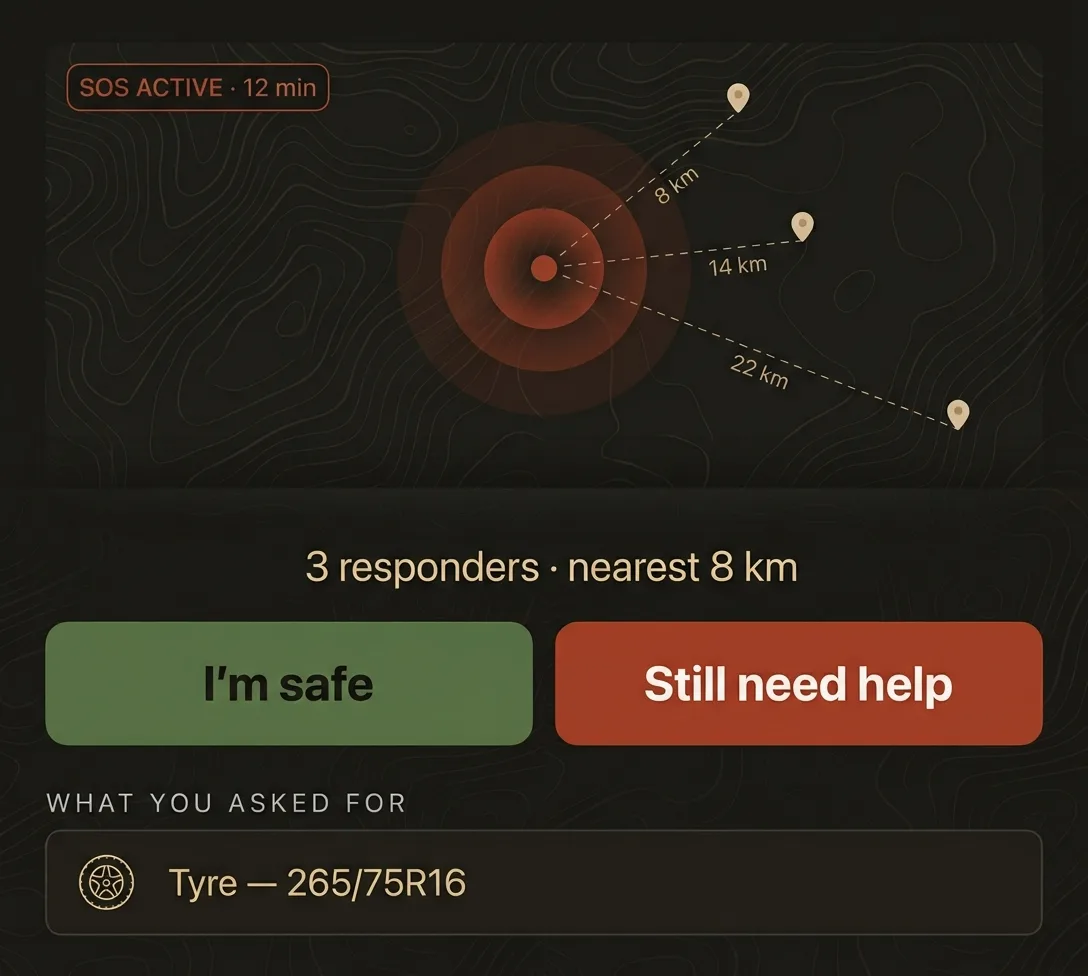
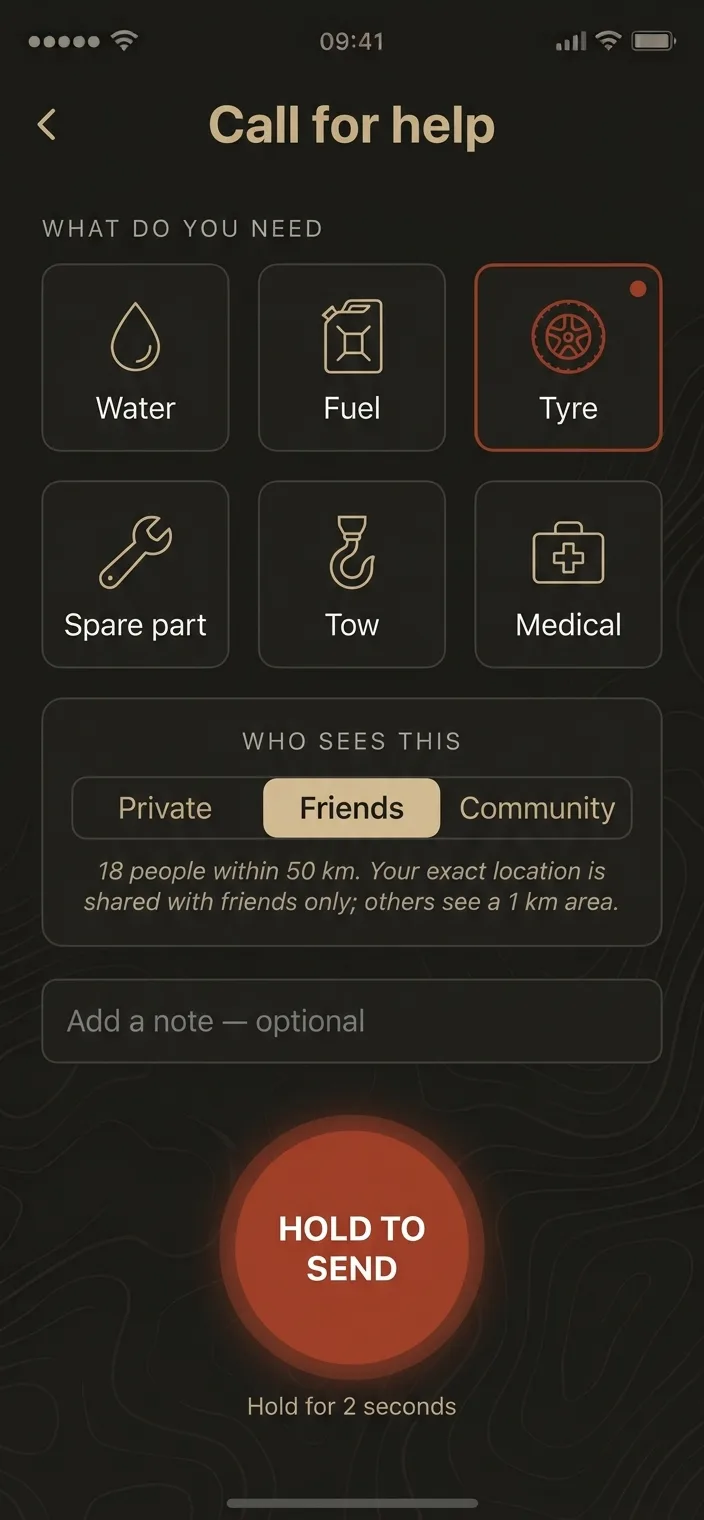
Narrow on purpose: say what you need — water, a tyre, a part, fuel, a tow, medical — and ask the people within range, starting with your own circles. Not a panic button. A flat battery, a lost key and no water left all have to be sayable.
- Friends would see where you are. Strangers would see roughly where — precision drops as the audience widens.
- Asking beyond your circles would need a verified phone number, and be rate-limited with a cooldown.
- It ships last, deliberately. An anonymous unlimited broadcast to strangers is an abuse channel, and this is the feature where being wrong matters most.
08 — Privacy
Nothing reaches strangers by default.
An app that knows what is in your vehicle and where you park it has to earn that. So visibility is set per item, not per account. A new item is visible to your Friends — people you added yourself — and to nobody beyond them: reaching the wider community is always a change you make deliberately, item by item.
If even that is too much, the default is yours to change: set it to Private in settings and every new item starts visible to you alone. Either way the rules are enforced by the database, not by each screen remembering to check.
-
Private
Only you.
-
Friends
DefaultPeople in your Friends circle.
-
Community
Anyone using OI.
- Self-hosted backend in the EU, on infrastructure we run — not a third-party analytics stack with your kit list in it.
- Contact happens in the app. Phone numbers and email addresses are not handed out.
- No location history. Where you have been is not something the app keeps.
- The app is usable with no account at all, entirely on the device, if you only want the inventory.
09 — The screen you carry
Android now. iPhone next. And a plan for the fold.
Android comes first, then a native iOS app — built properly for iPhone, not the Android app in a wrapper.
Folding phones earn their keep here, because this app gets used outdoors with the tailgate open and your hands full. Here is what is coming for them.
- Unfolded, two panes. Your kit list stays where it is and the item opens beside it, instead of covering what you were reading.
- Half folded, stood on the bonnet. The map faces you on the top half, the controls sit flat under your thumbs on the bottom. Put it down and work through the list.
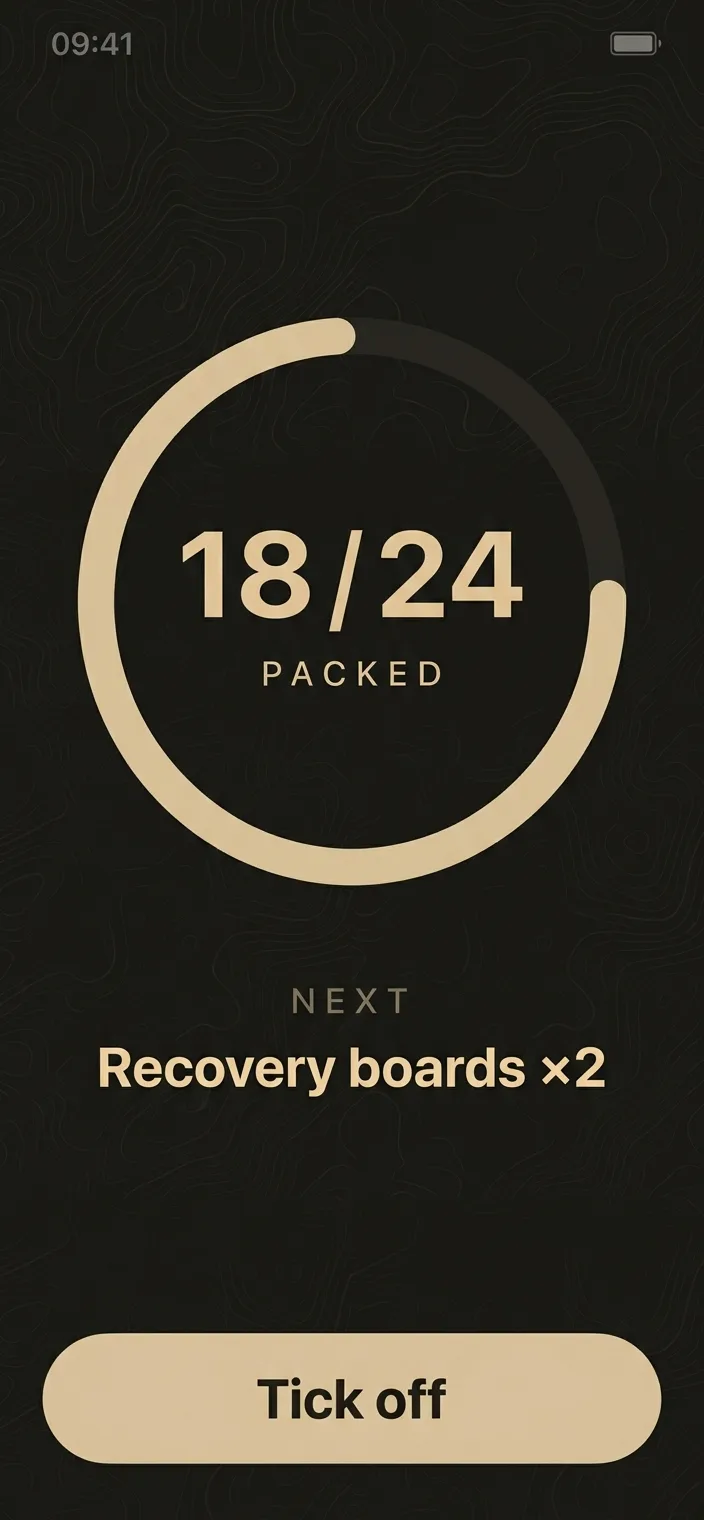
- Folded shut, ticking off boxes. The cover screen shows what is packed and what is next, one tap each. Loading is two-handed work.
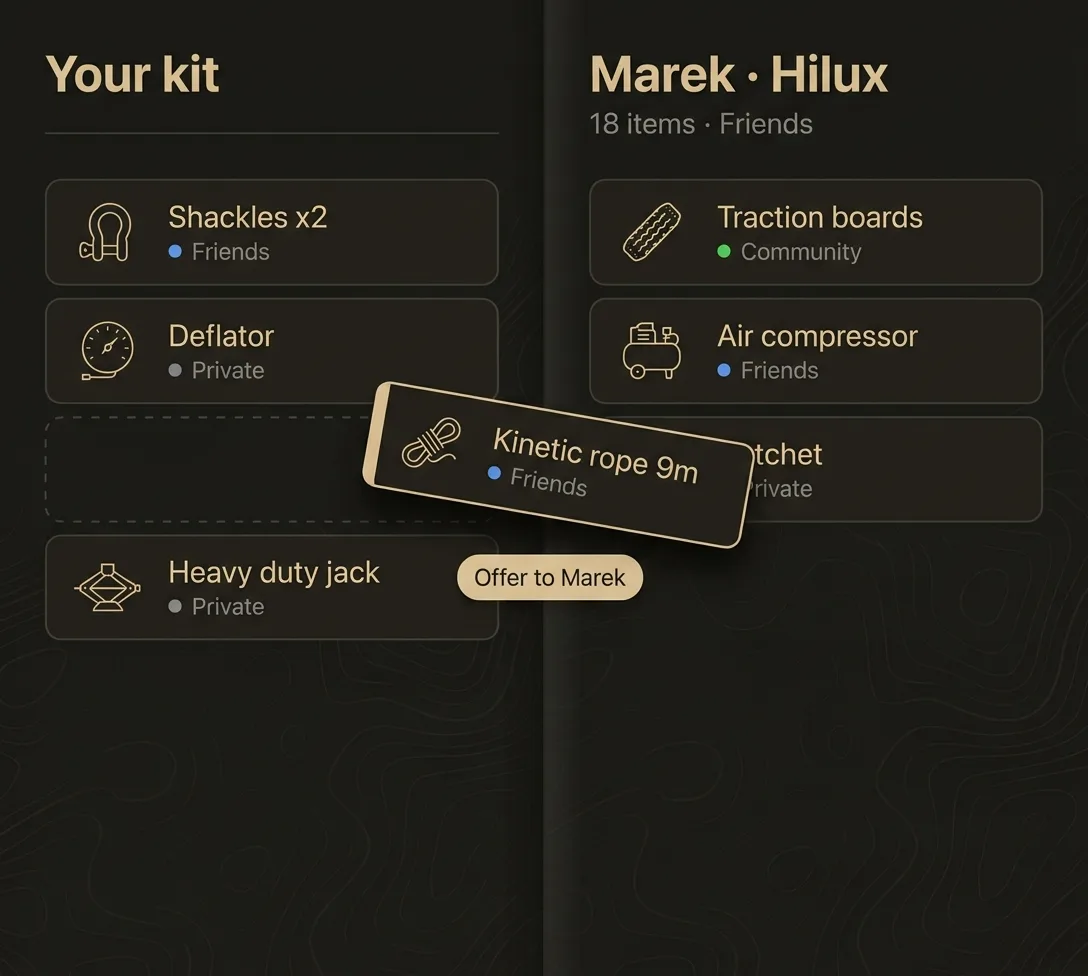
- Across the crease. Your kit on one side, a friend's on the other. Drag an item over the hinge to offer it — and it still takes both of you to close the loan.
10 — Where it is now
In beta, and specific about it.
Built in the order it was designed in: the parts that work on their own first, the parts that need other people after. The first list is in the build testers are running; the second is what comes next.
In the beta build
- Several rigs, each with its item count, weight and vehicle type
- Kit lists — grouped, searchable, filterable, with a retired section
- Per-item history: acquisition, trips, borrowers
- Vehicle checks and the service log
- Trip planning, invitations, checklists and the wrap-up
- Frozen logs of past trips, and the gear ledger
- The group load check
- Circles by invite link, username or scanned code
- A read-only view of a friend's kit, at the visibility they chose
- Photos on rigs, items and trip covers
- Sync of rigs, kit, vehicle checks and service records
- Full offline use, with or without an account
- Google and Apple sign-in
Upcoming
- SOS, with the phone verification that gates it
- Push notifications — until they arrive, a request is waiting the next time the app is opened
- The nearby map, once it can be tested with real location fixes
- Borrowing end to end between two people, beyond the test rig
- Trip edits from participants — today only the organiser can change a trip
- Loans syncing to the server — today they live on the device
- A public build, and the store listing that carries it
- Account deletion from inside the app — by email until then
- The iOS app, built natively for iPhone and iPad, after the Android release
- Layouts that use the whole screen on foldables and tablets
Get on the beta.
Leave an address and you get one email when there is a build to install. One email, nothing else — no newsletter, no countdown.